From Corn Starch to PHA: plseco’s Guide to Choosing Truly Sustainable Packaging Materials
From Corn Starch to PHA: Which Biodegradable Packaging Material Is Truly Eco-Friendly?
As the world turns away from single-use plastic, biodegradable packaging materials have become the new focus—but not all “eco-friendly” options are created equal. From corn starch-based bags that claim to “disintegrate overnight” to PHA (Polyhydroxyalkanoates) products hailed as “plastic’s perfect replacement,” how do you tell which one delivers on its green promises?
At plseco, with 12 years of expertise in biodegradable packaging, we’ve tested and optimized countless material formulations. In this guide, we’ll compare three mainstream biodegradable packaging materials—corn starch blends, PLA (Polylactic Acid), and PHA—across 5 critical metrics: environmental impact, degradation performance, practicality, cost, and real-world application. By the end, you’ll know which material is truly “green” and why plseco’s tailored solutions stand out in the market.
1. First: What Are These Biodegradable Materials?
Before diving into comparisons, let’s break down the basics of each material—so you understand their origins and core characteristics.
- Corn Starch Blends: The “Plant-Powered Classic”
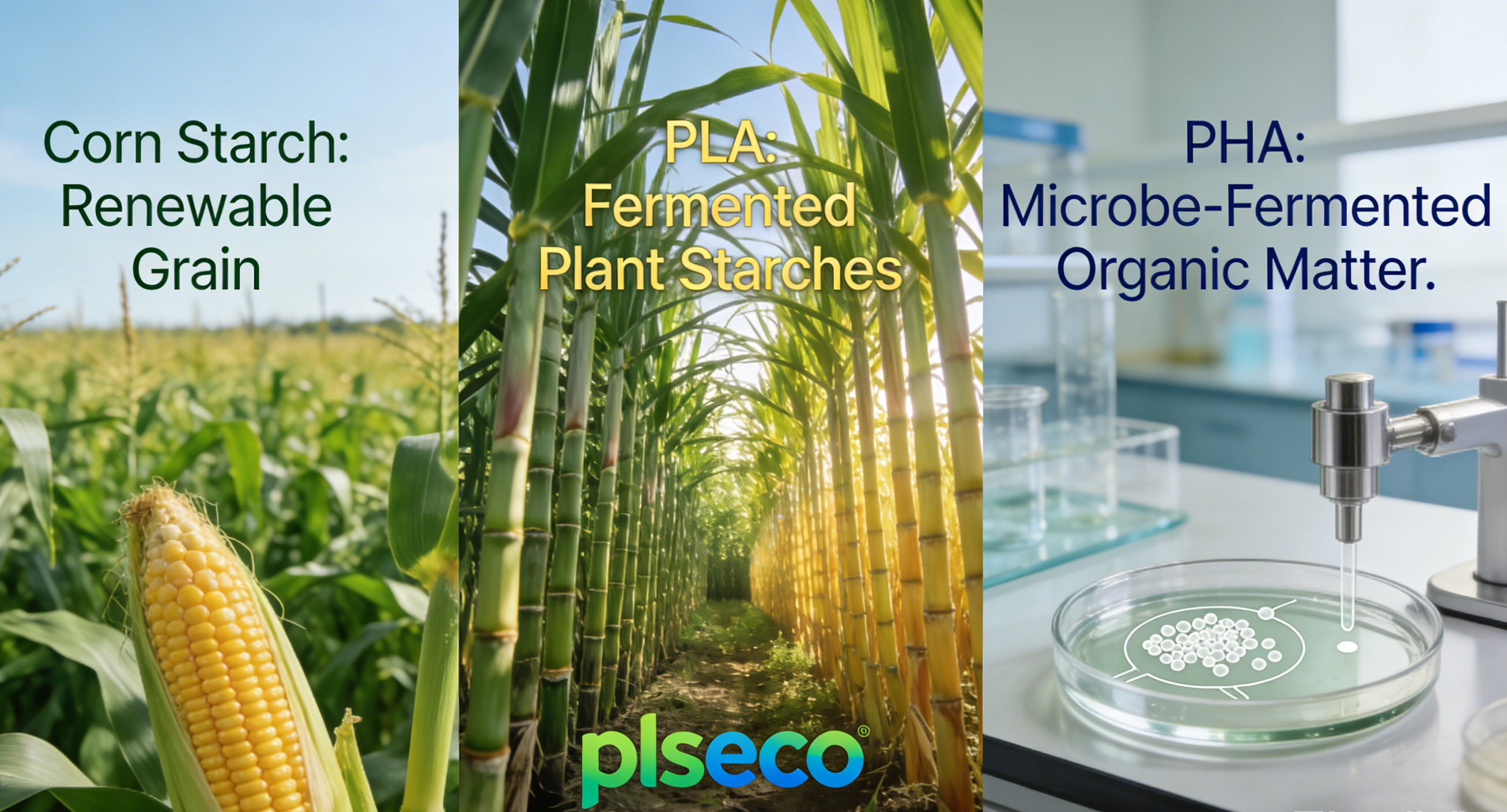
Made from renewable corn starch (often mixed with PBAT for flexibility), this material is one of the earliest biodegradable options. It’s beloved for its low cost and “100% plant-based” marketing appeal—ideal for budget-conscious brands looking to dip their toes into sustainability.
- PLA (Polylactic Acid): The “Industry Workhorse”
Derived from fermented plant starches (corn, sugarcane), PLA is the most widely used biodegradable material in packaging. It’s rigid, transparent, and easy to process—making it a go-to for bottles, food containers, and thin bags. However, its biodegradability is often misunderstood (more on that later!).
- PHA (Polyhydroxyalkanoates): The “Next-Gen Contender”
Produced by microbial fermentation of organic matter (sugars, oils, even agricultural waste), PHA is a newer material gaining traction for its superior biodegradability. It’s flexible, durable, and works in both industrial and home compost environments—positioned as the “holy grail” of biodegradable plastics.
2. Head-to-Head Comparison: Which Material Is Truly Eco-Friendly?
We’ve evaluated each material against 5 key criteria to separate “greenwashing” from genuine sustainability. Here’s the unfiltered breakdown:
| Evaluation Metric | Corn Starch Blends | PLA (Polylactic Acid) | PHA (Polyhydroxyalkanoates) | plseco’s Preferred Choice (Why?) |
| Material Source | Renewable (corn), but requires large farmland | Renewable (corn/sugarcane), high crop demand | Renewable (organic matter, even waste streams) | PHA + PLA Blends: Balances renewability and low resource impact |
| Degradation Performance | Fast in home compost (90-120 days) but brittle; breaks down in water (poor for wet products) | Only degrades in industrial compost (55-60°C); no decomposition in home bins or landfills | Degrades in ALL environments (home/industrial compost, soil, even marine water) in 180-365 days | Tailored blends (e.g., 70% PHA + 30% PLA) for universal compostability |
| Practicality (Durability/Use Case) | Fragile, tears easily; not suitable for heavy or wet items | Rigid, good for dry goods; poor flexibility (needs PBAT blending for bags) | Flexible, tear-resistant; works for bags, food packaging, even outdoor use | Optimized flexibility + strength for retail, food service, and industrial needs |
Environmental Impact | High water/fertilizer use for corn; may compete with food crops | Similar crop resource demands; microplastic risk if not composted properly | Low resource use; no competition with food crops; zero microplastics | Carbon-neutral production + third-party verified zero-waste processes |
Cost-Effectiveness | Lowest cost (great for entry-level sustainability) | Mid-range (widely available, scalable) | Highest cost (currently limited production) | Tiered pricing: Corn starch blends for budget, PHA blends for premium eco-brands |
3. The Truth About “Eco-Friendliness”: It’s Not Just About Degradation
Many brands focus solely on “how fast a material decomposes,” but true environmentalism requires looking at the entire lifecycle: from raw material extraction to production, use, and end-of-life.
- Corn Starch: Great in Theory, Flawed in Practice
While corn starch decomposes quickly in ideal conditions, it has hidden downsides:
- Resource Competition: Growing corn for packaging uses land, water, and fertilizers that could feed people (a critical issue amid global food insecurity).
- Practical Limitations: It’s brittle and water-sensitive—so bags often tear during use, leading to more waste.
- Contamination Risk: If mixed with non-compostable waste, it breaks down into a sticky mess that clogs recycling machinery.
- PLA: The “Most Popular” Doesn’t Mean “Most Eco-Friendly”
PLA is everywhere—but it’s not as green as it seems:
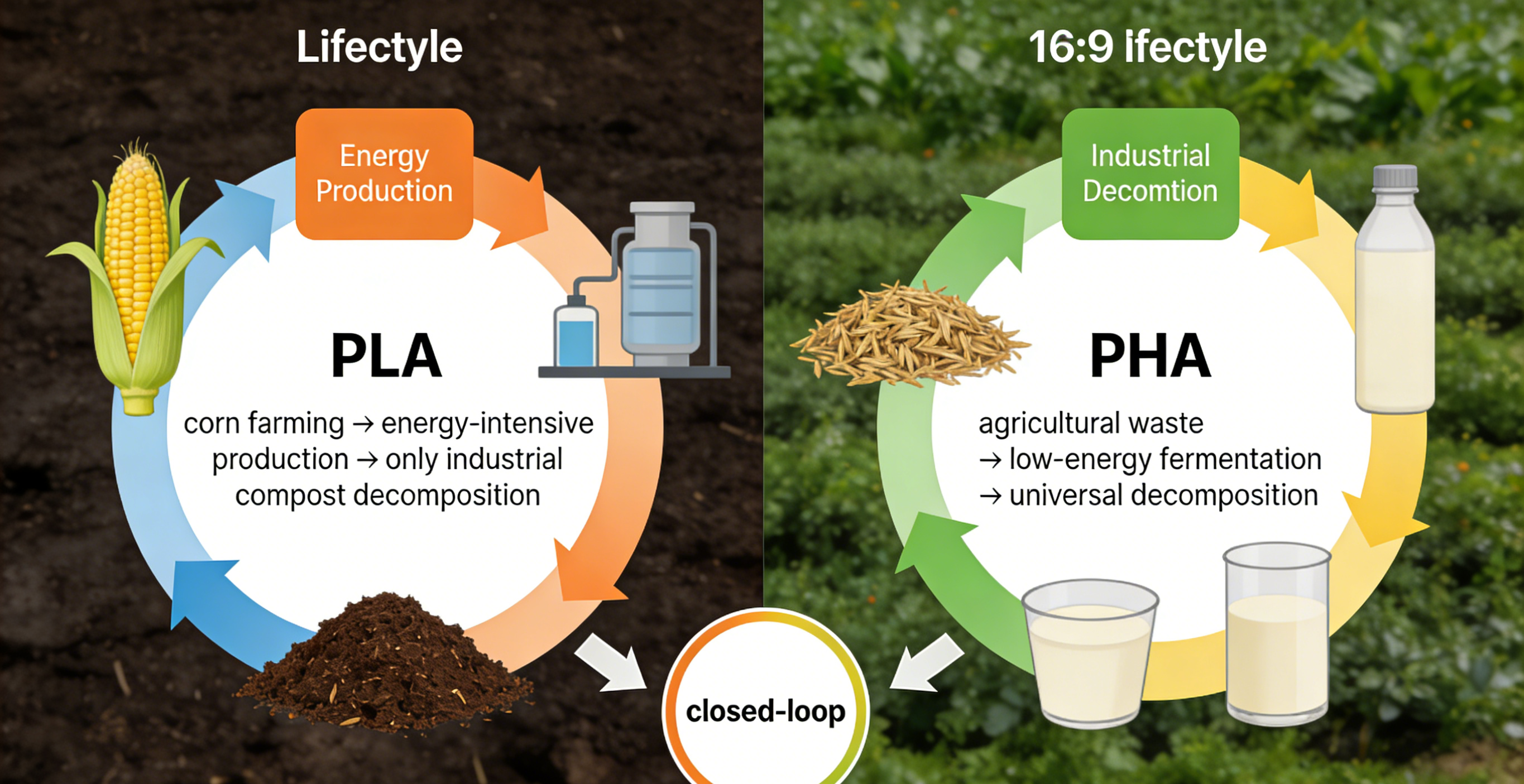
- Strict Decomposition Requirements: It only breaks down in industrial compost facilities (55-60°C with constant aeration)—something 90% of households don’t have access to.
- Microplastic Hazard: If PLA ends up in landfills or oceans, it behaves like traditional plastic, breaking into microplastics that persist for decades.
- Energy-Intensive Production: Fermenting corn into PLA requires high temperatures and chemical processing, increasing its carbon footprint.
- PHA: The “True Eco-Champion” (With Caveats)
PHA solves most of PLA and corn starch’s flaws—but it’s not perfect:
- Universal Compostability: It decomposes in home compost, industrial facilities, soil, and even marine environments—no special conditions needed.
- Low Environmental Impact: It can be made from agricultural waste (e.g., sugarcane bagasse) or algae, so it doesn’t compete with food crops.
- Zero Microplastics: It breaks down into water and CO₂, leaving no toxic residues.
- Caveat: It’s currently more expensive than PLA or corn starch (though prices are dropping as production scales).
4. plseco’s Approach: Choosing the Right Material for Your Needs
At plseco, we don’t believe in a “one-size-fits-all” biodegradable material. Instead, we tailor our solutions to your specific use case, budget, and sustainability goals:
- For Budget-Conscious Brands: Corn Starch + PBAT Blends
Our entry-level line uses corn starch blended with PBAT (a flexible biodegradable polymer) to fix brittleness. These bags are ideal for light-duty use (e.g., produce bags, gift bags) and meet OK Compost INDUSTRIAL certification—perfect for brands making their first sustainability push.
- For Versatile, Scalable Solutions: PLA + PBAT Blends
Our best-selling line combines PLA’s rigidity with PBAT’s flexibility, creating bags that work for retail, food service, and shipping. We source non-GMO PLA from sugarcane (reducing food crop competition) and ensure all products meet ASTM D6400/BPI certification—so they decompose in industrial compost facilities worldwide.
- For Premium, True Sustainability: PHA + PLA Blends
Our flagship line uses PHA (sourced from agricultural waste) blended with PLA to balance performance and eco-friendliness. These bags are home-compostable (OK Compost HOME certified), tear-resistant, and work in extreme conditions (e.g., frozen food packaging, outdoor events). They’re the choice for brands serious about zero-waste and carbon neutrality.
Case Study: A European grocery chain switched from PLA-only bags to plseco’s PHA + PLA blends. Within 6 months, they reduced customer complaints about bag breakage by 50% and diverted 30% more packaging from landfills (thanks to home compostability).
5. How to Spot a “Genuine Eco-Friendly” Material (Avoid Greenwashing)
With so many materials on the market, here are 3 questions to ask suppliers to ensure you’re getting true sustainability:
1. What certifications do you hold? Look for OK Compost HOME/INDUSTRIAL, BPI (ASTM D6400), or EN13432—avoid “self-certified” claims.
2. What’s the material’s full lifecycle? Ask about raw material sourcing, production energy use, and decomposition requirements.
3. Do you provide third-party test reports? Verify decomposition rates, microplastic residue, and carbon footprint with independent lab data.
plseco answers all these questions upfront: every product comes with full certification documents, lifecycle assessments, and test reports. We believe transparency is just as important as sustainability.
6. The Verdict: Who Is the “True Eco-Friendly” Material?
If we had to pick a winner, PHA is the most environmentally friendly material—thanks to its universal compostability, low resource use, and zero microplastics. However, it’s not the best choice for every brand (cost remains a barrier).
For most businesses, plseco’s tailored blends (PLA + PBAT or PHA + PLA) offer the perfect balance of sustainability, practicality, and cost. We don’t force you to choose between “eco-friendly” and “usable”—our materials deliver both.
Ready to Choose the Right Biodegradable Material for Your Brand?
Whether you’re a small boutique or a global retailer, plseco has the expertise and products to help you make a genuine sustainability impact.
Take the next step:
- Request a free Material Sample Kit (includes corn starch, PLA + PBAT, and PHA + PLA samples) to test quality and feel.
- Download our Biodegradable Material Guide (PDF) for detailed lifecycle data and certification explanations.
- Schedule a consultation with our sustainability experts to find the perfect material for your needs.