Compostable vs. Recyclable: plseco’s Guide to Proper Disposal & Sustainability
Are Compostable Bags Recyclable? The Complete Guide by plseco
You sort your trash carefully: plastic bottles in recycling, food scraps in compost, and that “eco-friendly” compostable bag? You toss it in recycling, thinking you’re doubling down on sustainability. But here’s the hard truth: compostable bags are not recyclable—and putting them in recycling bins does more harm than good.
As a leader in biodegradable packaging with 12 years of expertise, plseco is here to clear up the confusion. In this guide, we’ll explain why compostable bags and recycling systems don’t mix, the damage caused by cross-contamination, and how to properly dispose of compostable bags to maximize their environmental benefits.
1. First: Why Compostable Bags Can’t Be Recycled (It’s Science)
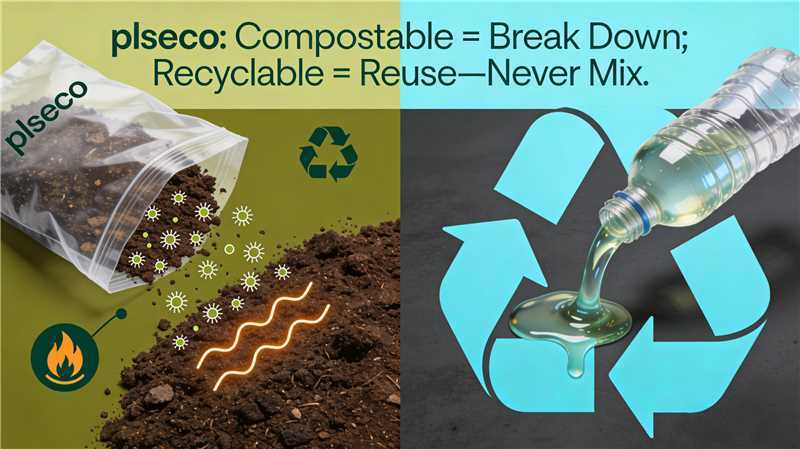
Compostable bags and recyclable plastics are designed for two entirely different end-of-life journeys—their molecular structures, materials, and goals are polar opposites. Mixing them is like putting a banana peel in a glass recycling bin: it ruins the batch.
The Core Differences: Compostable vs. Recyclable
| Aspect | Compostable Bags (plseco Style) | Recyclable Plastics (e.g., PET, HDPE) |
| Materials | Plant-based (PLA, PBAT, cornstarch blends) | Petroleum-based (fossil fuel derivatives) |
| Molecular Structure | Weak polymer chains designed to break down | Strong, stable polymer chains built to be reused |
| End Goal | Decompose into water, CO₂, and nutrient-rich soil | Melt and reform into new plastic products indefinitely |
Processing Needs | Heat (50-60°C), moisture, and microbial activity | Sorting, washing, and melting at precise temperatures |
Contamination Tolerance | None—they contaminate recyclables | Extremely low—even small impurities ruin batches |
plseco’s compostable bags are engineered to disintegrate in compost environments, not survive recycling. Their weak polymer chains start breaking down when exposed to heat or moisture—exactly the conditions in recycling facilities.
2. The Hidden Damage of Putting Compostable Bags in Recycling
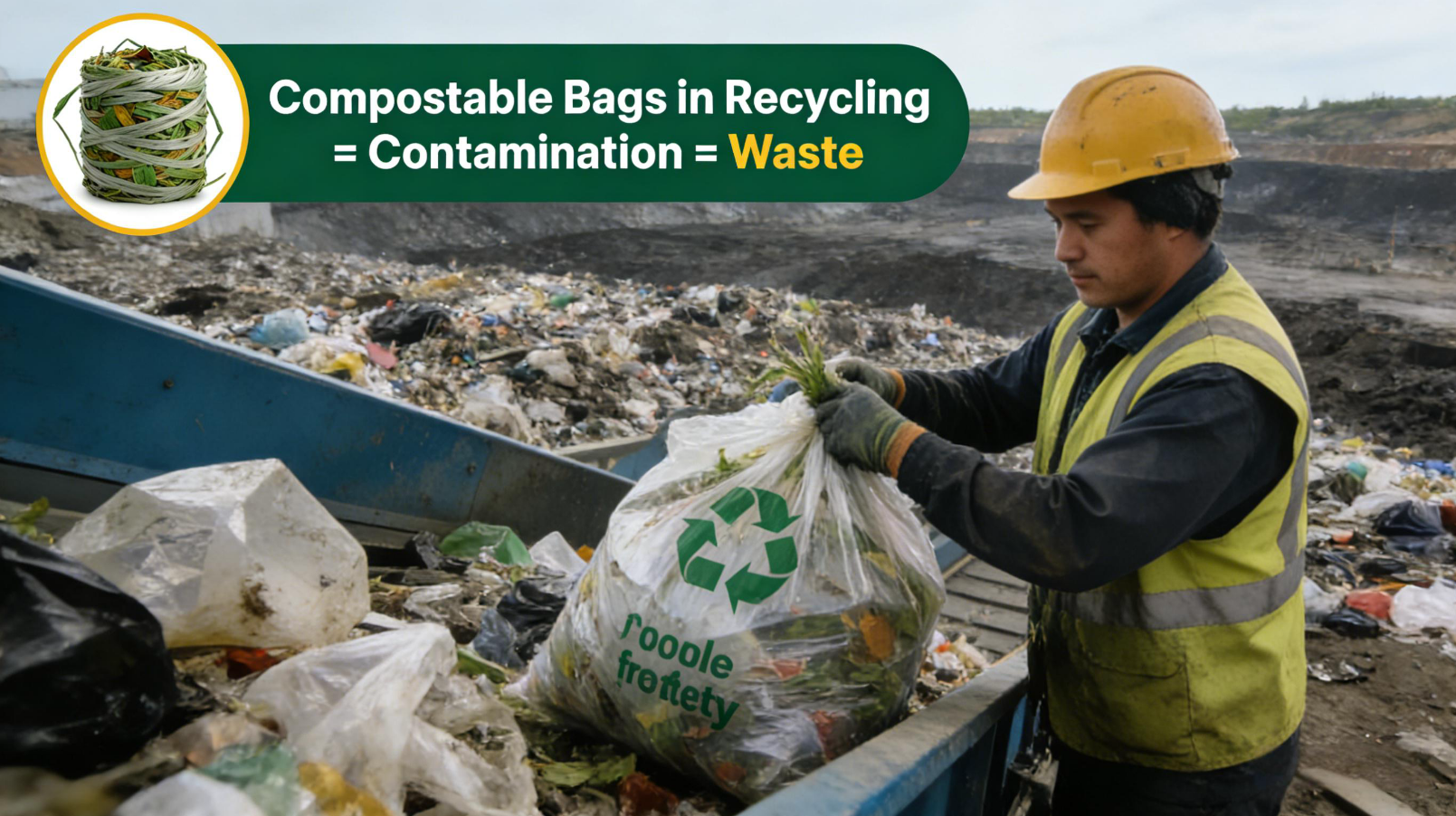
When compostable bags sneak into recycling bins, they create a chain reaction of problems for facilities, budgets, and the planet.
Problem 1: They Clog and Damage Machinery
Compostable bags are lightweight and elastic—during recycling sorting, they wrap around conveyor belts, optical scanners, and melting equipment. This causes jams that shut down facilities for hours, costing thousands in repairs. A single compostable bag can halt an entire sorting line.
Problem 2: They Contaminate Recyclable Batches
Recycling facilities require pure materials to make high-quality recycled plastic. When compostable bags are mixed in:
-They melt at lower temperatures than traditional plastics, creating bubbles and weaknesses in recycled products (e.g., flimsy bottles or brittle containers).
-They release gases during melting, ruining entire batches—contaminated loads are often rejected and sent to landfills.
A U.S. recycling facility reported that just 5% compostable bag contamination in a batch makes the entire load unrecyclable.
Problem 3: They Waste Resources (and Undermine Sustainability)
Compostable bags are meant to become soil—recyclable plastics are meant to be reused. When they’re mixed, both end up in landfills: the compostable bag can’t decompose (landfills lack oxygen/moisture), and the recyclable plastic is too contaminated to process. It’s a double waste of materials and effort.
3. How to Identify “Truly Compostable” Bags (Avoid Greenwashing)
Not all “eco-friendly” bags are created equal. To ensure you’re buying a bag that works as intended (and won’t ruin recycling), look for third-party certifications—the only way to verify genuine compostability.
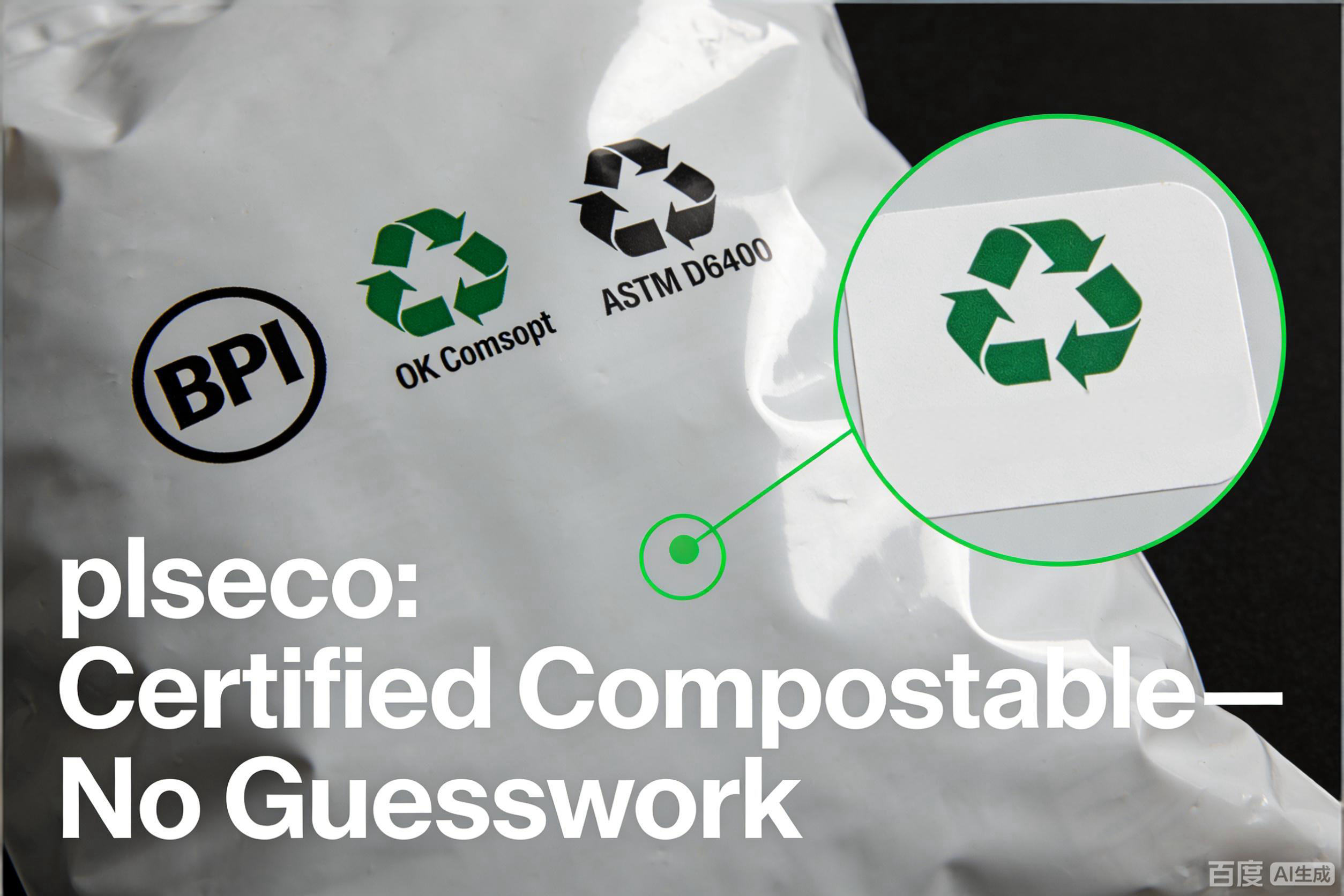
plseco’s bags carry three trusted certifications:
-BPI (ASTM D6400): North America’s gold standard—guarantees full decomposition in industrial compost within 180 days.
-OK Compost INDUSTRIAL: European certification for commercial compost facilities.
-OK Compost HOME: Validates decomposition in backyard compost bins (for select plseco products).
Avoid bags labeled only “biodegradable”—this unregulated term means they may break into microplastics, not fully decompose. plseco’s clear labeling ensures you never confuse compostable with recyclable.
4. The Correct Way to Dispose of Compostable Bags
To maximize the environmental benefits of plseco’s compostable bags, follow these three steps:
Step 1: Check Local Compost Infrastructure
Compostable bags need specific conditions to decompose. First, confirm your area’s options:
Curbside Compost Collection: Many cities (e.g., Seattle, San Francisco, Berlin) now accept compostable packaging in food waste bins.
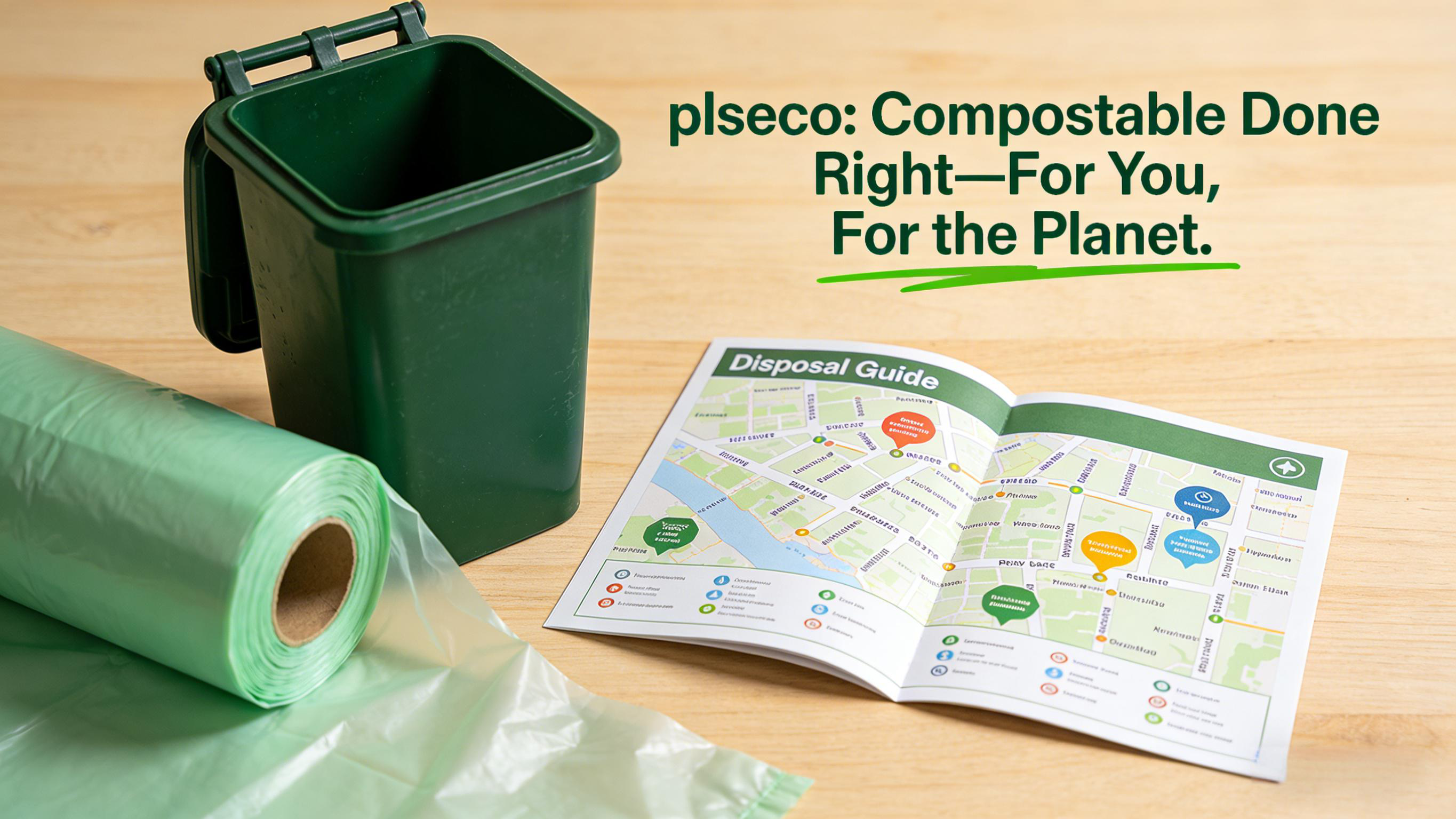
Industrial Compost Facilities: Use plseco’s online “Compost Facility Finder” to locate drop-off points near you.
Home Compost: For OK Compost HOME-certified plseco bags, toss them into your backyard compost bin (mix with dried leaves for balanced decomposition).
Step 2: Avoid Contamination in Compost
- Remove non-compostable items (e.g., stickers, metal clips) from the bag before disposal.
- Don’t mix compostable bags with recyclables—even a single bag can ruin a batch.
Step 3: Follow plseco’s Label Guidance
Every plseco bag has clear disposal instructions:
- “Industrial Compost Only”: For bags certified for commercial facilities (look for OK Compost INDUSTRIAL/BPI logos).
- “Home Compost Safe”: For bags designed for backyard use (look for OK Compost HOME certification).
- “Do Not Recycle”: Bold text to remind you never to toss in recycling bins.
5. Why plseco’s Compostable Bags Are Designed for Responsible Disposal
plseco doesn’t just make compostable bags—we design them to fit into real-world waste systems, minimizing confusion and contamination:
- Clear Labeling: Bold “Do Not Recycle” and certification logos leave no room for error.
- Dual-Certified Options: Choose industrial or home compostable bags based on your local infrastructure.
- Education Resources: Our website offers a “Local Compost Guide” with searchable facilities and curbside collection info.
- Low-Contamination Design: plseco’s bags are tinted green (distinct from clear/white recyclable plastics) to help sorting facilities spot them easily.
A plseco customer in Chicago shared: “The clear labels on plseco’s bags mean I never mix them up. I drop them in my curbside compost bin, and knowing they’re not ruining recycling makes me feel good about my choice.”
6. The Bottom Line: Compostable Bags Are a Solution—If Disposed of Correctly
Compostable bags are a powerful tool in the fight against plastic pollution—but only when used and disposed of properly. Putting them in recycling bins undermines their purpose; directing them to compost facilities turns them into soil, closing the circular economy loop.
plseco’s certified compostable bags, paired with proper disposal, let you make a genuine sustainability impact without unintended harm.
Ready to choose responsible compostable packaging?
- Order plseco’s certified compostable bags (available in retail, food service, and pet waste styles).
- Download our free “Compostable Disposal Guide” to find local facilities.
- Request a sample to test quality and see our clear labeling firsthand.