Compostable vs. Recyclable: How to Dispose of plseco’s Bags Correctly
Do Compostable Bags Break Down in Landfills? The Truth by plseco
You buy compostable bags to reduce your environmental footprint, toss them in the trash when you’re done, and assume they’ll “naturally” break down in a landfill. But here’s the uncomfortable truth: most compostable bags do NOT decompose in landfills—and even plseco’s high-quality options won’t live up to their eco-promise in a garbage dump.
As a leader in biodegradable packaging with over a decade of expertise, plseco believes in radical transparency. In this blog, we’ll expose why landfills are a death sentence for compostable bags, what actually happens to them underground, and how to ensure your plseco bags fulfill their sustainability potential.
1. Why Landfills Kill Compostable Bag Decomposition
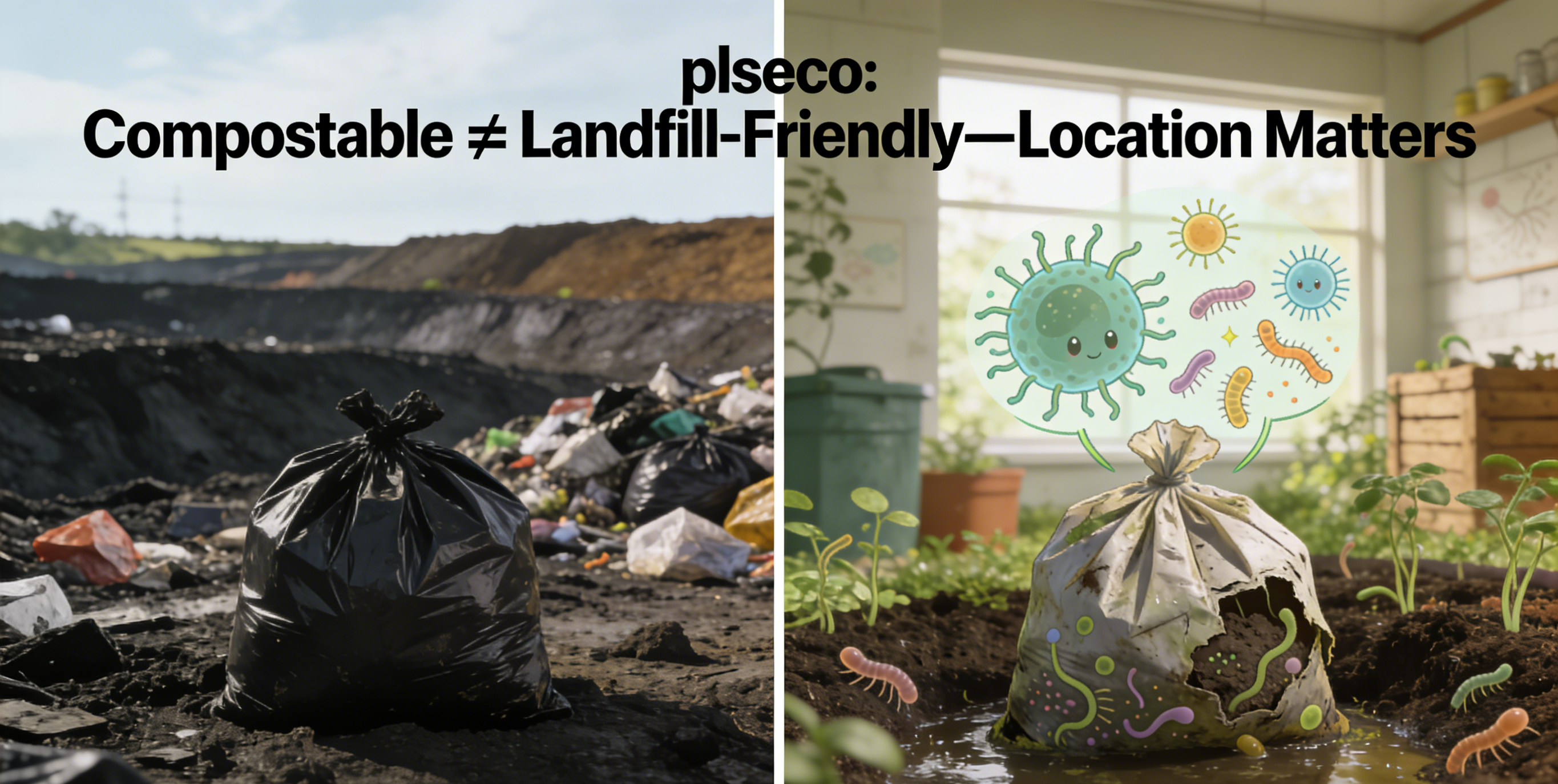
Compostable bags—including plseco’s—are engineered to break down under specific conditions: oxygen, moisture, and warm temperatures (50-60°C for industrial compost, 20-25°C for home compost). Landfills, however, are designed to prevent decomposition—creating a “death trap” for eco-friendly bags.
The Landfill Problem: 3 Barriers to Breakdown
The Core Differences: Compostable vs. Recyclable
Anaerobic Environment: Landfills are compacted tightly to save space, squeezing out all oxygen. Compostable bags rely on aerobic microbes (oxygen-loving bacteria) to break down their plant-based polymers (PLA, PBAT, cornstarch). Without oxygen, these microbes die off—leaving the bag intact for decades.
- Lack of Moisture: Landfill layers are lined with clay or plastic to prevent leachate (toxic liquid) from seeping into soil. This lining also blocks rainwater from reaching the waste, keeping the environment dry. Compostable bags need 50-60% humidity to trigger decomposition—landfills rarely hit 30%.
- Stagnant Temperatures: Decomposition generates heat, but landfill compaction traps this heat unevenly. Most landfill layers stay between 10-20°C—far too cold to activate the microbial activity needed for plseco’s bags to break down.
The result? A plseco compostable bag in a landfill will behave like traditional plastic: it will sit, unchanged, for 50+ years—defeating the purpose of choosing “eco-friendly” packaging.
2. What Really Happens to Compostable Bags in Landfills
When plseco’s compostable bags end up in landfills, they don’t just sit idle—they contribute to two hidden environmental problems:
Problem 1: Methane Emissions
In anaerobic landfills, organic materials (like the plant-based polymers in plseco’s bags) break down very slowly into methane—a greenhouse gas 28 times more potent than CO₂. While plseco’s bags are designed to avoid this by decomposing in compost, landfill conditions force them to release methane over decades.
Problem 2: Microplastic Risk (If They Finally Break Down)
If a compostable bag is exposed to minimal oxygen and moisture over 50+ years, it may fragment into microplastics—tiny plastic-like particles that contaminate soil and groundwater. This is the opposite of what plseco’s bags are built to do: in proper compost, they fully decompose into water, CO₂, and nutrient-rich soil—no microplastics left behind.
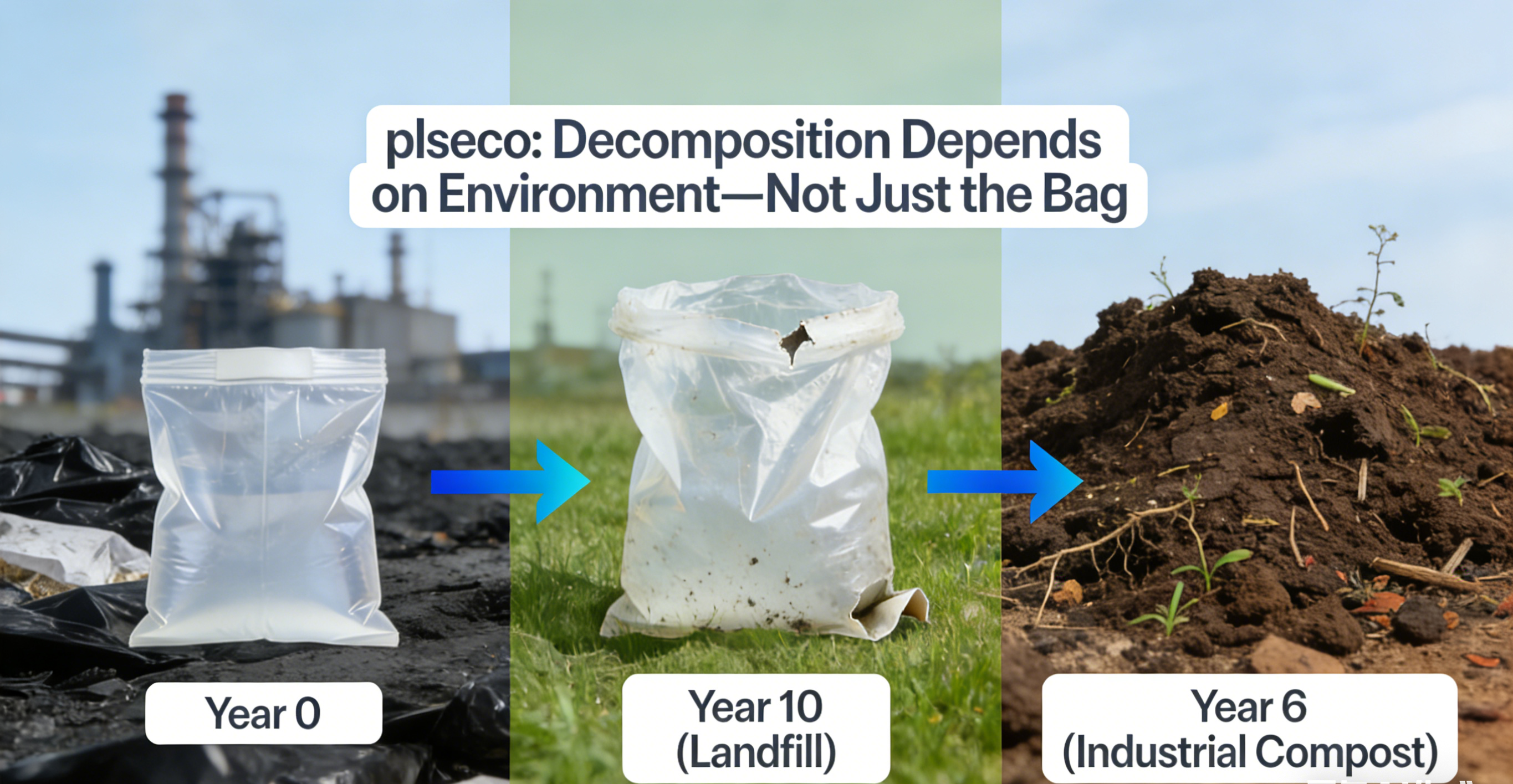
A 2025 study by the Environmental Research Institute found that compostable bags in landfills showed just 5% decomposition after 10 years—compared to 90% decomposition in industrial compost in 6 months.
3. The Good News: plseco’s Bags Break Down When Disposed of Correctly
While landfills stop decomposition in its tracks, plseco’s compostable bags shine in the environments they’re designed for: home compost bins and industrial compost facilities.
plseco’s Decomposition Promise (Backed by Certifications)
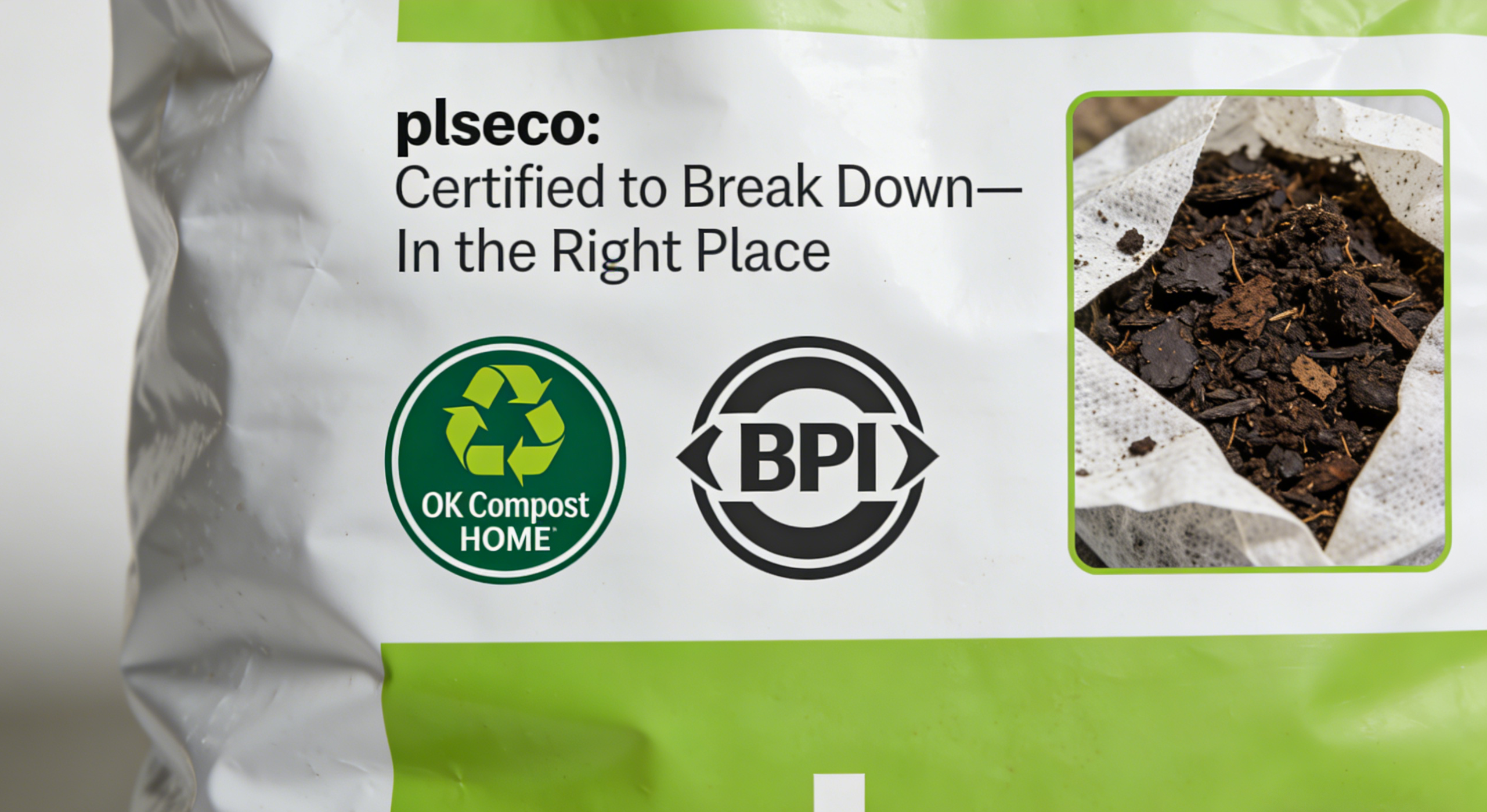
Every plseco compostable bag is certified to global standards that guarantee full decomposition—when placed in the right environment:
OK Compost HOME (TÜV Austria): Breaks down 90% in 180 days in backyard compost (20-25°C, oxygen-rich).
BPI (ASTM D6400, USA): Decomposes 90% in 180 days in industrial compost (55-60°C, controlled moisture).
EN13432 (EU): Ensures no toxic residues or microplastics—just nutrient-rich humus.
Our bags are made from a proprietary blend of non-GMO PLA, PBAT, and cornstarch—engineered to disintegrate quickly when microbes, oxygen, and moisture are present. A plseco customer in Portland shared: “I tossed one of their food waste bags in my backyard compost—6 months later, it was gone, and my tomato plants are thriving!”
4. How to Ensure Your plseco Bags Decompose (Avoid Landfills!)
To maximize the sustainability of your plseco bags, follow these 3 simple steps—avoiding landfills at all costs:
Step 1: Use Curbside Compost (If Available)
Many cities (e.g., Seattle, San Francisco, Berlin) now offer curbside compost collection for food waste and compostable packaging. plseco’s bags are approved for these programs—just toss your used bag (with food scraps inside!) into the compost bin. The bags will be sent to industrial facilities where they’ll break down efficiently.
Step 2: Compost at Home (For OK Compost HOME-Certified Bags)
If you have a backyard compost bin or tumbler, use plseco’s home-compostable bags. Follow these tips for fast decomposition:
Mix the bag with “brown” materials (dried leaves, sawdust) at a 2:1 ratio (browns to bag/waste).
Turn the compost pile weekly to add oxygen.
Keep the pile moist (like a wrung-out sponge).
Step 3: Find a Local Industrial Compost Facility
If curbside compost isn’t available, use plseco’s free “Compost Facility Finder” (on our website) to locate drop-off points. We’ve mapped 5,000+ certified facilities worldwide that accept plseco’s bags.
5. Why plseco’s Bags Are Different (Even If They End Up in a Landfill)
We know accidents happen—sometimes plseco bags wind up in landfills despite your best efforts. While they won’t decompose there, they’re still a better choice than traditional plastic:
- No Toxic Chemicals: Unlike petroleum-based plastic bags, plseco’s bags contain no BPA, phthalates, or heavy metals. Even in landfills, they won’t leach harmful substances into soil or water.
- Lower Carbon Footprint: Our plant-based materials have a 60% lower carbon footprint than plastic—so even if they sit in a landfill, they’re responsible for less greenhouse gas emissions during production.
- Designed for Recovery: If landfills adopt aerobic processing in the future (a growing trend), plseco’s bags will start decomposing—unlike plastic, which will never break down.
6. The Bottom Line: Compostable Bags Work—But Not in Landfills
The truth is: compostable bags are only as eco-friendly as their disposal. Toss them in a landfill, and they’re just another piece of long-lasting waste. But dispose of them in compost (home or industrial), and plseco’s bags become a force for good—turning waste into soil that feeds plants.
At plseco, we don’t just sell compostable bags—we empower you to use them correctly. With clear labeling, global certifications, and free resources, we make it easy to skip the landfill and unlock true sustainability.
Ready to choose compostable bags that deliver on their promise?
- Order plseco’s certified compostable bags (home/industrial options available).
- Download our free “Home Compost Guide” for tips on fast decomposition.
- Request a sample to test quality, durability, and decomposition for yourself.